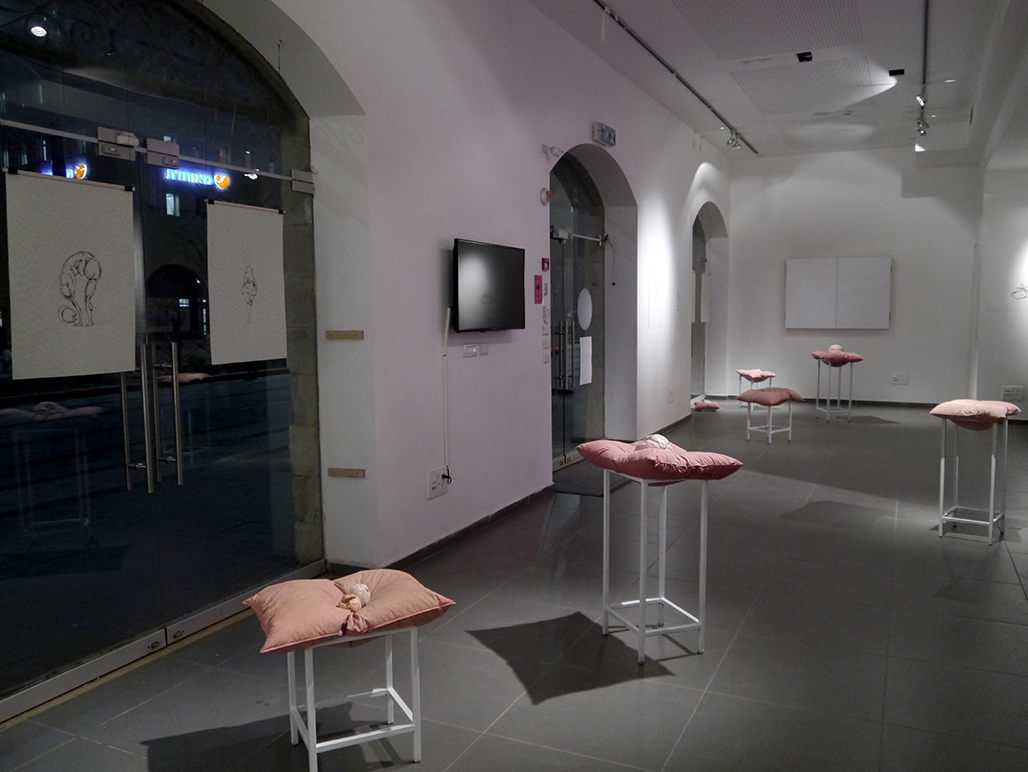
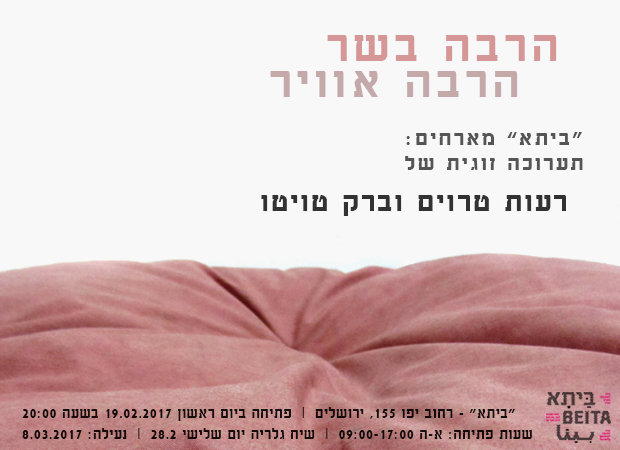
In the exhibition Lots of Air, Lots of Flesh, Reut Traum and Barak Twito present works that explore the female body.
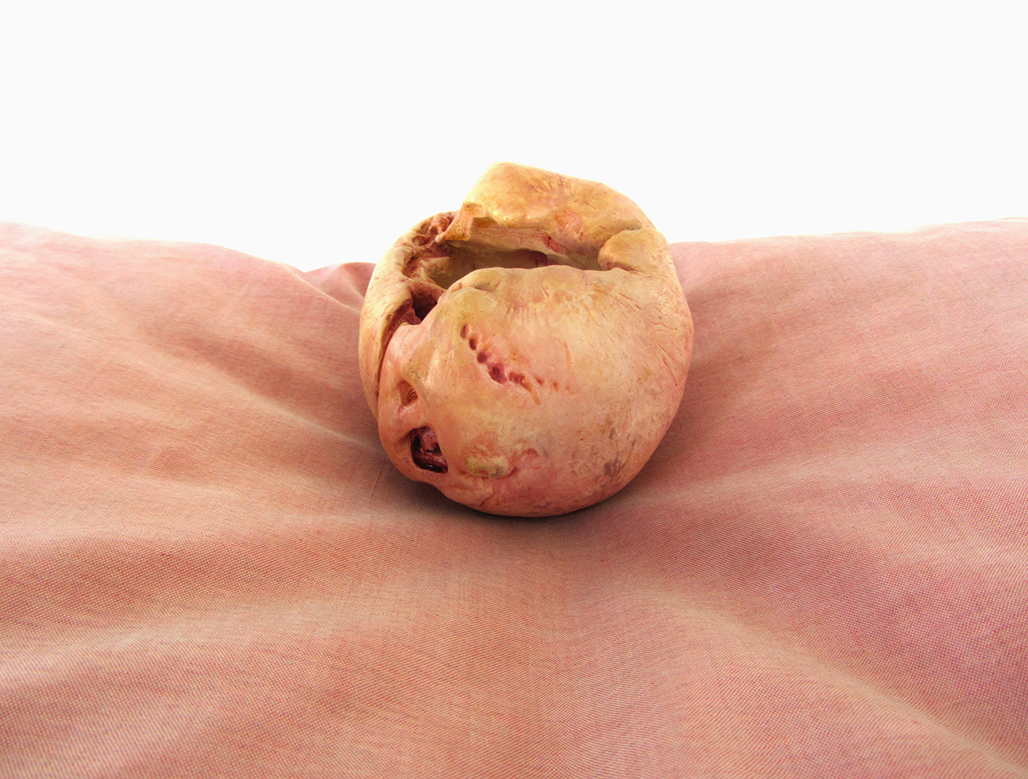
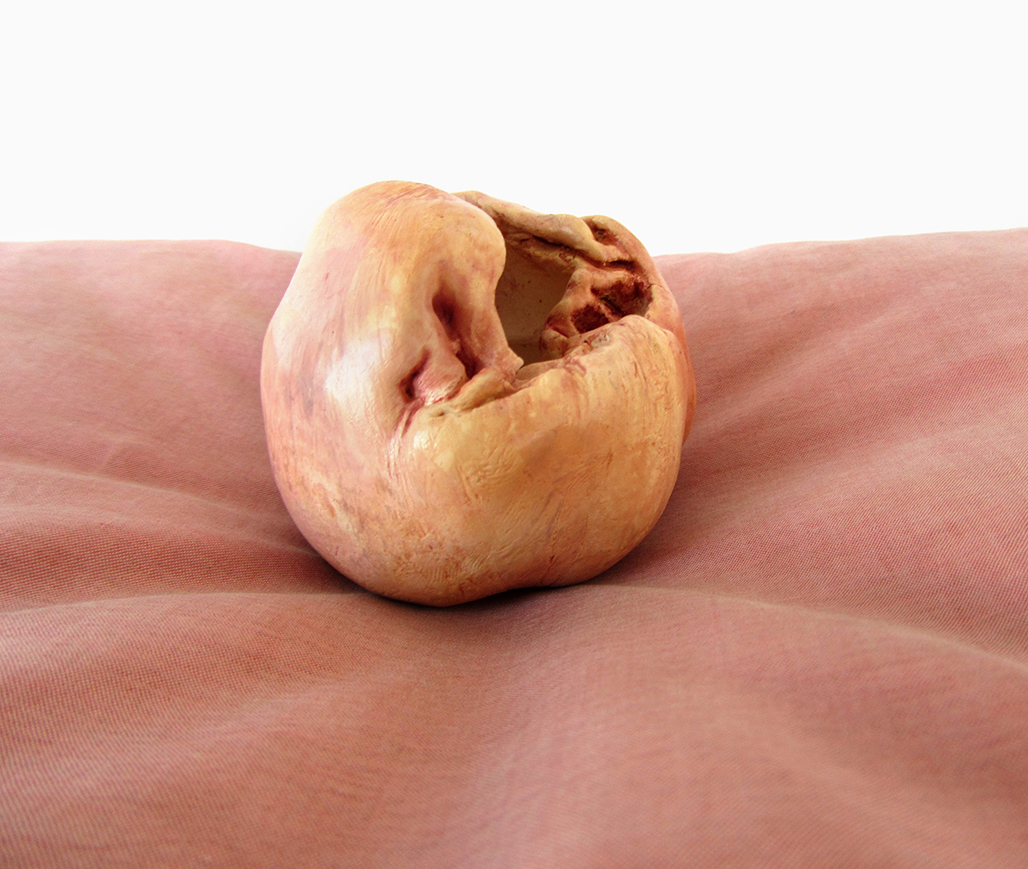
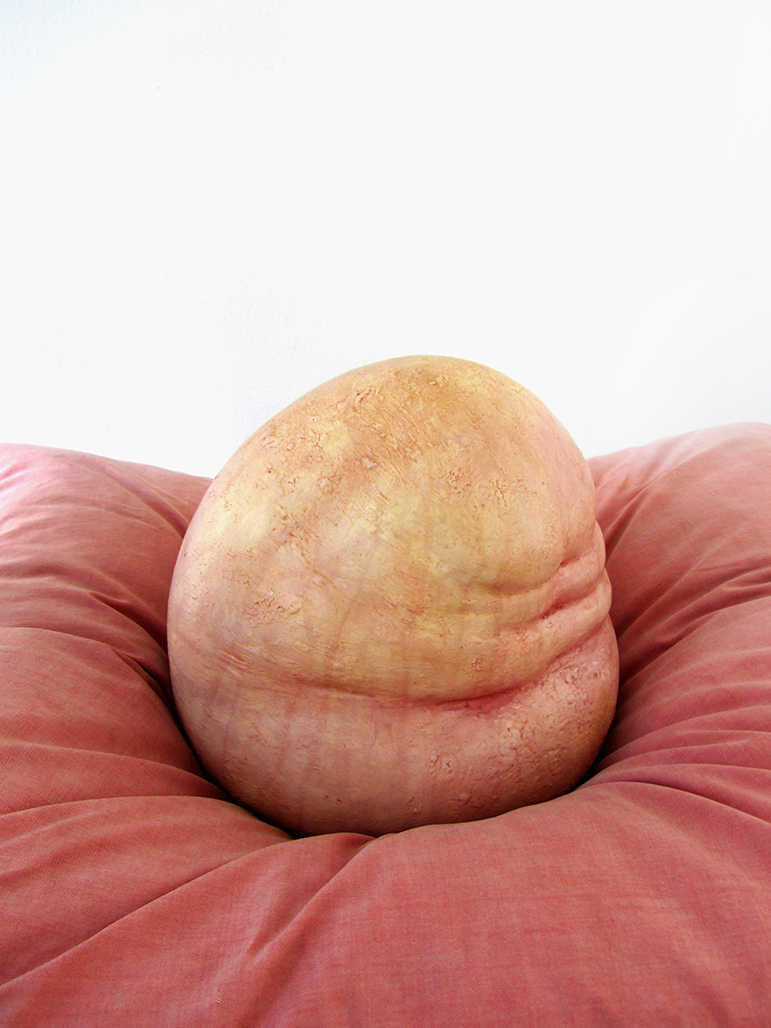
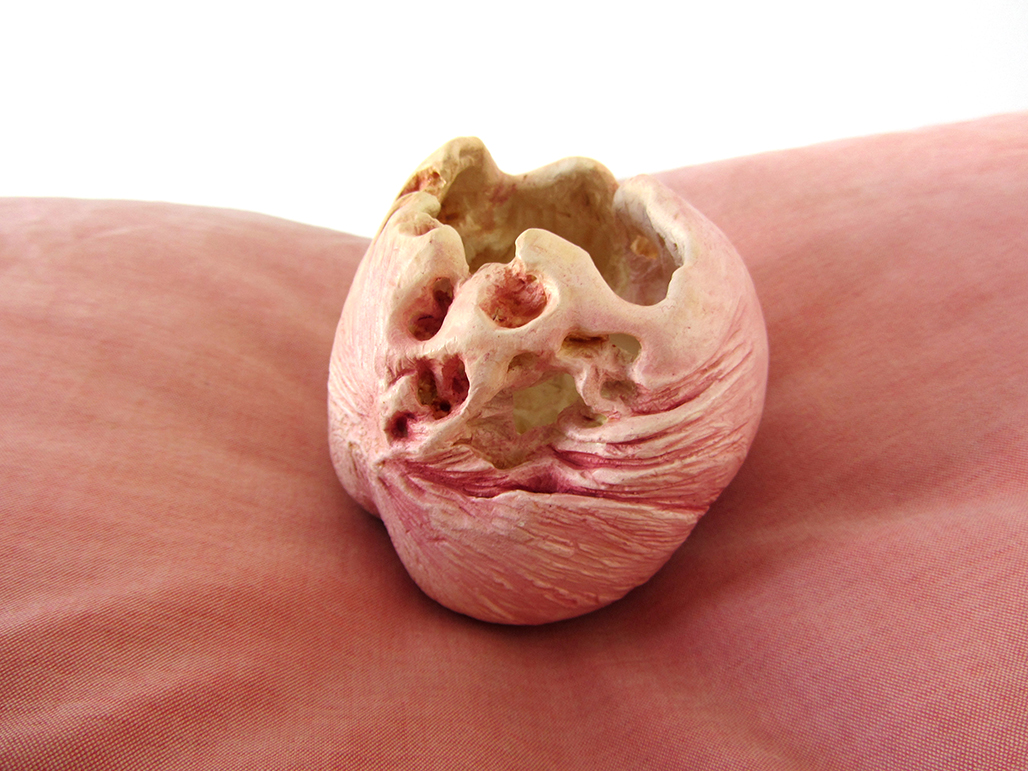
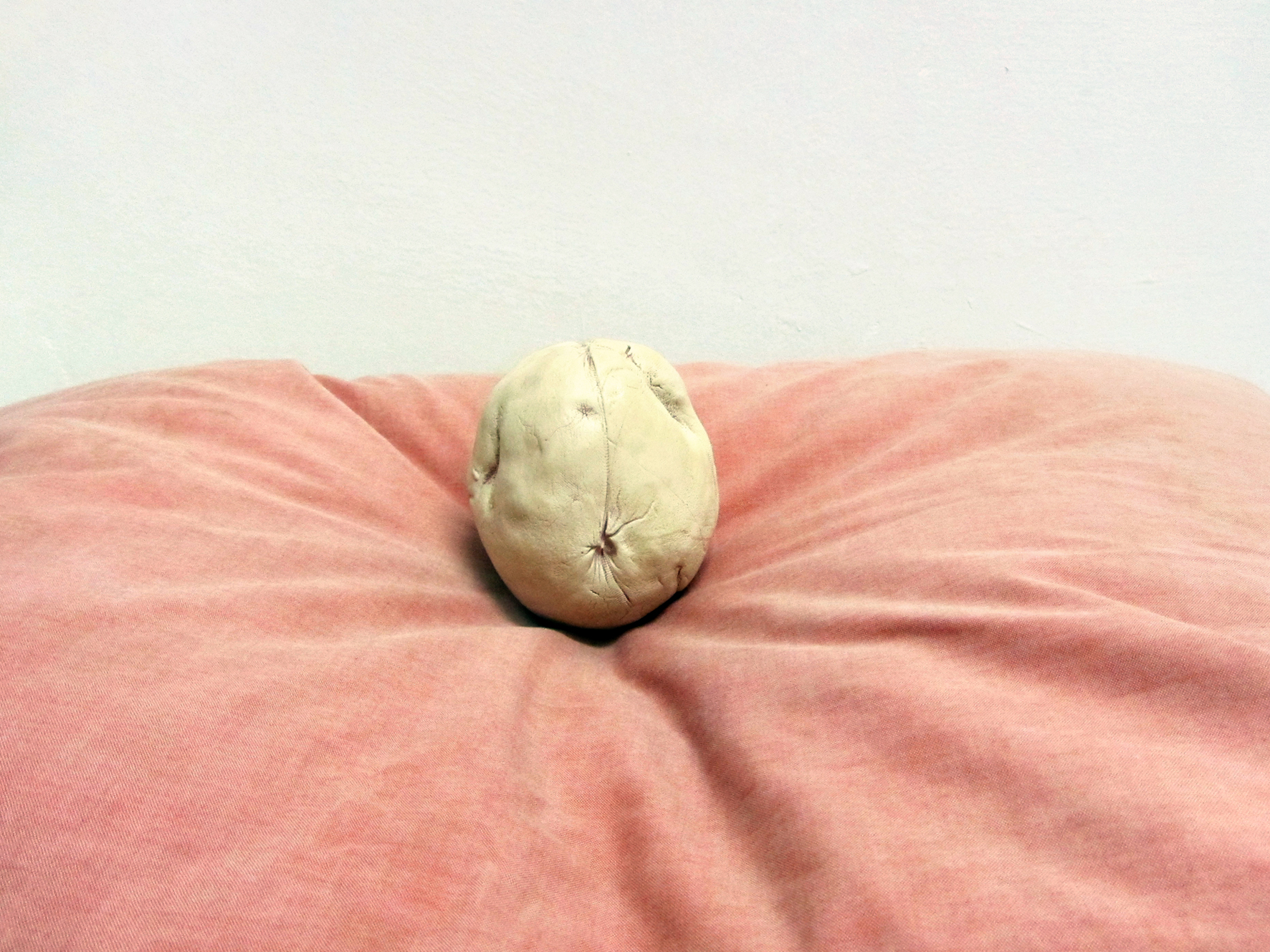
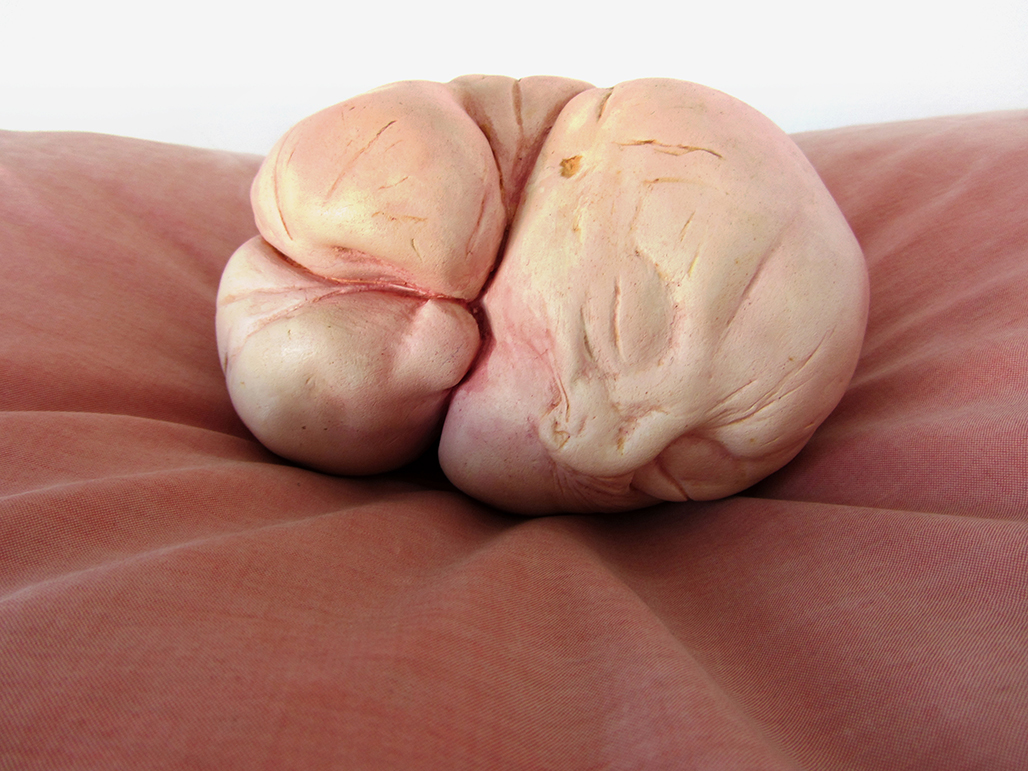
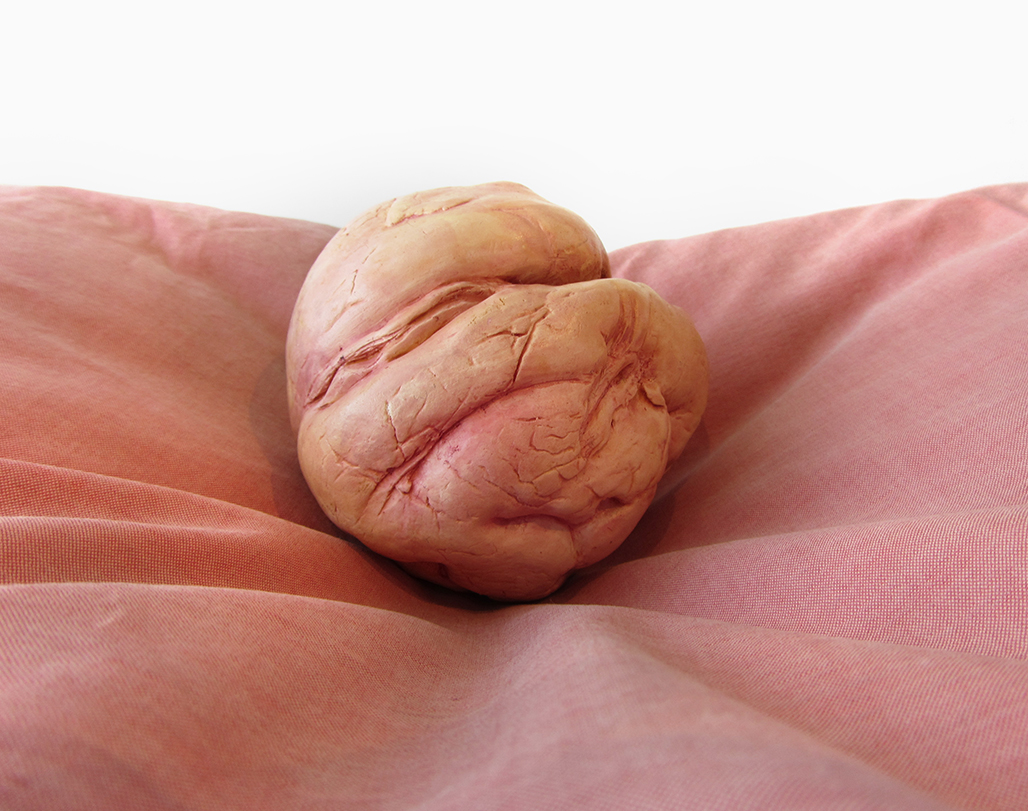
The sculptural bodies created by Twito explore the mystical dimension of flesh, the spirit of life within it. His works touch upon those transitional states in which the body takes shape and comes into being, or disintegrates and decays, giving rise to a voice that reveals the wondrous, miraculous nature of flesh.
At the heart of Reut Traum’s drawings lies a sense of dissonance between the inner and the outer, a gap between the experience of the psyche and the body’s physical presence. Through a process of graphic, physical and mental transparency, she reveals images of impossible women, torn between their aspirations toward ideals of beauty and the limitations of their bodies.
Traum and Twito are both artistic collaborators and life partners, creating independently and alongside one another. Their works engage in an intimate, personal and wide-ranging dialogue about the nature of the female body.
Visit Reut Traum’s website to explore her work.
Essay by Doria S., published in the exhibition catalogue
The exploration of physical and psychological states of transition lies at the heart of the new joint exhibition by Barak Twito and Reut Traum. Twito, a graduate of the Department of Ceramic and Glass Design at Bezalel Academy of Arts and Design, presents sculptures that resemble organic matter in the process of formation, captured in three dimensions midway through its transformation from an amorphous mass of flesh into muscles and tendons. This transitional state recalls a critical stage in the process of working with clay, known as “leather hard.” At this stage, a vessel or sculpture has not yet dried completely, allowing for further alterations and the addition of details, but it is no longer soft enough to be easily reshaped without risking breakage.
This is the stage at which a work takes shape and acquires its character. As I will discuss below, in Twito’s sculptures the leather-hard state persists even after firing. Before firing, he anoints them with milk in a private shamanic ritual, intended to facilitate the desired transformation. At the same time, however, this ritual also fixes them in an eternal limbo, frozen in anticipation of the spark that will bring them to life and reveal what they are destined to become. Alongside Twito’s sculptures, Traum presents meticulous drawings, employing clean, elegant lines to depict female figures whose bodies seem to have escaped their own control: their limbs are truncated; they wear cascading folds of body fat like dresses they never chose; and in some cases, the body’s movement itself seems to defy the familiar laws of physical logic.
Traum is a virtuoso draftsman with a confident hand. Her drawings bring a smile and invite identification, and her figures evoke affection even when their expressions appear gloomy or despairing. She describes them as “impossible women, torn between their aspirations toward ideals of beauty and the limitations of their bodies.” In her work, the blank sheet functions as an empty stage, upon which each figure stands exposed to the scrutinizing gazes of passersby. This recalls the policing of the female body by the media and popular culture, which often place very possible, very beautiful women at the center of a similar stage, subjecting them to a constant state of tension in relation to their bodies.
Power is at its strongest when it is invisible. Thus, despite the achievements of successive generations of feminism, the current state of affairs appears natural to many. When a man enters the world, he is perceived through the prism of his personal qualities as a whole, his chosen profession, his social and personal circles, and so forth. When a woman enters the world, by contrast, she is first and foremost a body, every part of which is examined meticulously and individually against a set of specific demands. These demands may change, but they remain invariably rigid.
Naomi Wolf’s highly influential book The Beauty Myth: How Images of Beauty Are Used Against Women was first published in 1990. In it, Wolf offered a lucid and unsettling analysis, demonstrating how the beauty myth was aggressively promoted from the 1950s onward in order to meet the emerging economic needs of a changing capitalist market. Since then, the discourse surrounding the female body and resistance to its regulation has become so intense that it may seem there is nothing new left to say about it. Perhaps this is also one of the reasons we have stopped seeing it.
This is where artists such as Traum, and before her Ariella Plotkin and Ariella Shavid, enter the picture, succeeding in illuminating the issue from a fresh perspective. In her 1996 exhibition Beauty Is a Promise of Happiness, Ariella Shavid addressed her own body following a mastectomy. In the exhibition, Shavid assumed various female personas inspired by glamorous fashion photographs, creating them through garments that she sometimes altered or specially tailored to emphasize her missing breast. In his essay Less and More Than Two, Roy Rosen describes the images of the artist’s mastectomy as a sexual gift she offers to the viewers, and the results of the body’s “amputation” – the absence carved into her chest – as an object of desire in its own right. Shavid’s works resisted didactic interpretations that would have placed them on one side or the other of some binary dividing line. The body she presented was sexual and seductive, yet the absence of one breast could not be ignored: half of a pair that is supposed to serve as the ultimate symbol of female sexuality. She confidently inhabited personas drawn from popular culture, while simultaneously delivering a blow to their soft underbelly. Her upright posture was accompanied by a mischievous glint in her gaze, as though acknowledging the possible confusion of certain viewers.
The same refusal of dichotomous interpretation is at work in Traum’s drawings. The artist states that her figures are torn between their aspirations toward ideals of beauty and the limitations of their bodies. Yet the beauty of the works, together with the affection their figures inspire through their subtle humor, prevents them from remaining confined within a dry, oppressive self-criticism. Like many young women, they themselves are in a state of “leather hard.” Their internal negotiations with their bodies are still intense, but perhaps less so than in the past; they are no longer as fragile, and the discussion no longer threatens their sense of wholeness. At the same time, their sense of self has not yet solidified. This is a period of grace, of exploration and change, as they move toward the people they are becoming. Some are whole-bodied, some have truncated bodies, and in others the body distorts as it moves. Yet all seem to remain in a state of becoming. One senses that if the viewer were to turn away from the page for just a moment, they would come to life and continue to change: their limbs would lengthen or shorten, their bodies would shed or gain fat, and they would explore the full range of movement made possible by their newly acquired, nonexistent joints.
Traum, also a graduate of the Department of Ceramic and Glass Design at Bezalel, and Twito are partners who create independently and alongside one another. On a second look at their exhibition, Twito’s works take on a romantic quality, though never a sentimental one. His sculptures seem like a generous gift to his partner: the raw flesh of his sculptures, in the midst of its transformation into muscles and tendons, awaits the instructions of the figures created by the artist. They wait for a command that will determine whether the figures wish to lengthen their bodies and add their missing limbs, whether they are satisfied with the balance between their muscular and softer parts, and whether they desire additional, fantastical joints that will expand their range of movement. It is a remarkable artistic dialogue, one that viewers can experience in both its intimate and its public dimensions.
Doria S. | February 2017